Buy the Loan, Not the Building
When the owner is stuck and the bank wants out, the better entry point is often the note.
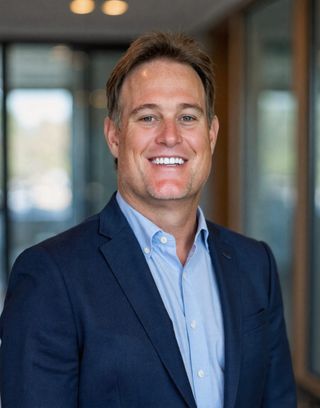
CEO of Rising Realty Partners, with 30 years in commercial real estate. The Real Market is his take on cities, capital, and the business of buildings — plain talk, no spin.
When the owner is stuck and the bank wants out, the better entry point is often the note.
Capital has drawn a line around the city limits, and the reasons are financial.
The AI real estate conversation is about data centers and office towers. The quieter story is in a 3,000-foot bay with a roll-up door.
Fifty-three. That is the number of street food vendors in Los Angeles County who hold a health permit, against roughly 50,000 vendors on the sidewalks. The county logged close to 10,000 complaints in three years and about 3,000 food poisoning reports in 2025 alone. Last fall
Volume is up, the private buyer is in the market, and it's still a terrible time for most sellers to sell. Both are true for the same reason.
The numerator is softer than the pro forma. The denominator is higher than January. This week's data made both worse.
There are some phrases going around all the capital conversations I’ve had this year, they kind of sound like wisdom: “Capital has gotten disciplined; Allocators are being selective; The bar is higher.” Everybody nods, because discipline is a virtue and nobody argues with a virtue. It’s what sponsors
There's a sentence in almost every 2026 business plan we've read, and in a few of our own. We'll refinance when rates come down. It wasn't a reckless thing to write. Back in February, the consensus had the funds rate ending this
It seems like everyone's watching for the same headline: a default, a foreclosure notice, a bank finally forced to take the keys. I know that's the first call I get from a real estate-focused reporter… "Did you see so-and-so just defaulted?"
Almost every capital conversation we have starts in the same place. Somebody tells us they're a value-add buyer. They want a business plan, not a finished product. They'd rather build something than buy something another operator already built. Four or five minutes later, the real
This Is Not the 1984 Deal Under the host city agreement, Los Angeles pays the first $270 million of any Olympic cost overrun. The state pays the next $270 million. Past that — no ceiling, no cap, no second guarantor — the bill is the city's alone. LA28, the private
The city's police chief says LA needs 12,500 officers. It has 8,551. The Olympic guarantee has no ceiling. And nobody at City Hall has been willing to make the call on what gets smaller. Part III of III.